Benefits of early reading
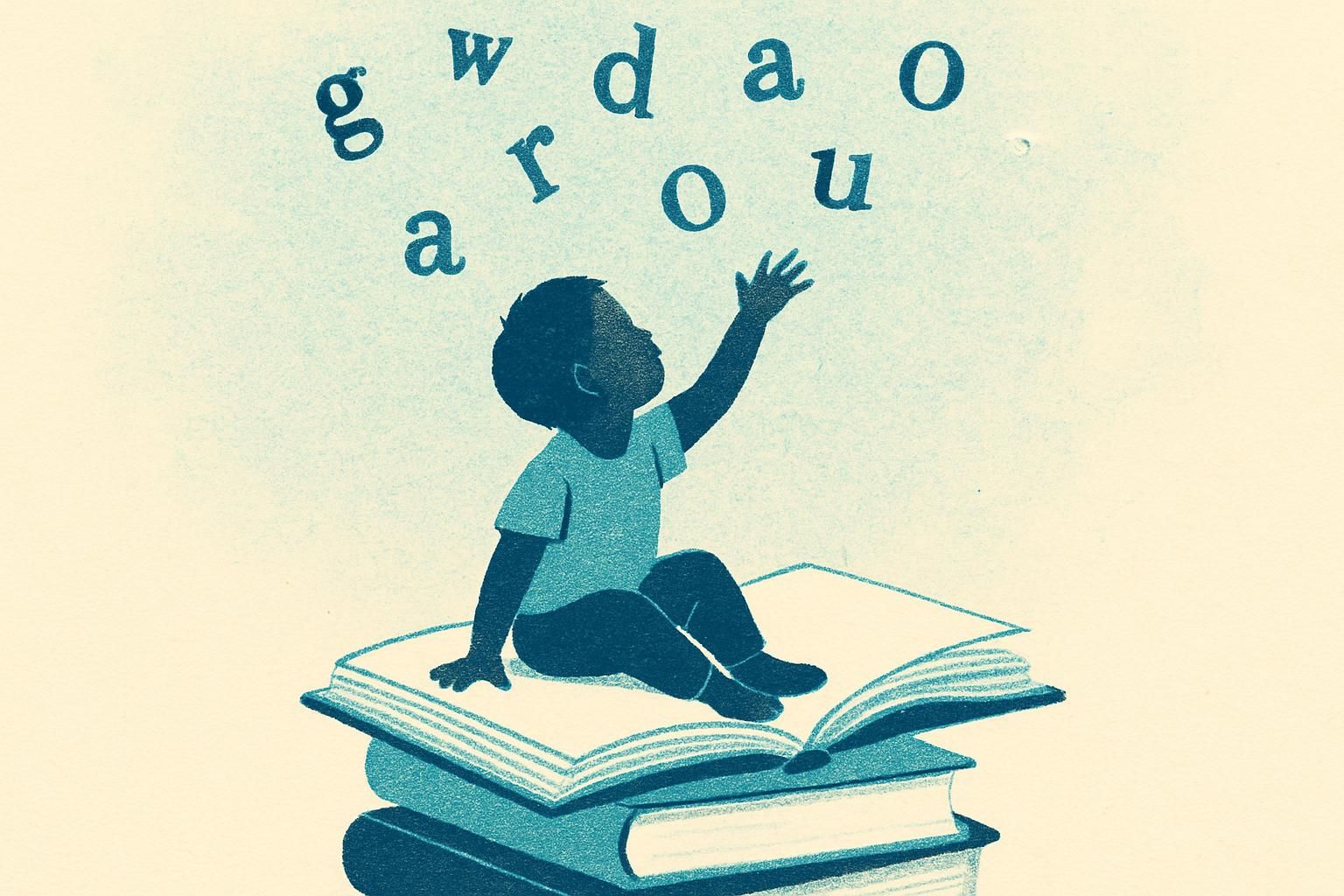
Most parents know, in a vague way, that reading is "good for children." But vague is not enough when you are deciding how to spend a tired Tuesday evening, or persuading a reluctant eight-year-old that a book is worth their time. The research on early reading is actually quite specific, and quite striking. This article lays out what the evidence says — benefit by benefit — and ends with practical suggestions for making it happen at home.
1. Vocabulary: the compounding advantage
Words are the foundation everything else is built on. Studies have shown that children who are exposed to reading prior to preschool tend to develop larger vocabularies and are more likely to succeed during their formal education. The mechanism is straightforward but powerful: books often include words that adults would not otherwise use, like names of plants or animals, and children are three times more likely to encounter new words during a read-aloud session than in regular conversation.
The gap this creates compounds over time. By age three, children who are frequently read to have heard approximately 1 million more words than children who are not, giving them a significant advantage in language development. Children with stronger early linguistic skills tend to outperform children with weak early linguistic skills on assessments of literacy abilities in school, and this gap appears to widen over time. Vocabulary researchers call this the Matthew effect: the word-rich get richer.
Why does vocabulary matter so much for reading specifically? Early vocabulary knowledge improves reading in several ways, including supporting comprehension of words that children decode and helping children more rapidly recognize familiar text. Later in schooling, as children become more proficient readers and advance to more complex print material, they are more likely to confront words during reading that they have not been exposed to via listening — a transition that likely occurs around third or fourth grade for many students. The children who arrive at that transition with a large word store sail through it; those who don't, struggle.
2. Language and literacy development
Daily read-alouds are among the most effective strategies for supporting early literacy, introducing new words, strengthening listening comprehension, and fostering positive attitudes toward reading. The key word is interactive. Dialogic reading is a type of interactive reading in which adults ask children questions, explain new vocabulary, and relate the story to a child's life. This helps young children develop important preliteracy skills, like story understanding and critical thinking.
Effective early language development does not arise from passive exposure alone; intentional instructional strategies, including repeated and contextualized word use, significantly enhance vocabulary acquisition. Television, by contrast, offers limited benefit for word learning — the back-and-forth of shared reading is what counts. Children who are read to more frequently at an early age enter school with larger vocabularies and more advanced comprehension skills.
A meta-analysis of 29 studies found "significant, positive effects for read-aloud interventions on children's language, phonological awareness, print concepts, comprehension, and vocabulary outcomes," with particular gains for children at risk of reading difficulties.
3. Concentration and cognitive skills
Reading to children has many benefits including an increase in literacy skills, language development, social and cognitive development, and ability to focus. A story provides one of the most natural training grounds for attention: the child wants to know what happens next, and that desire holds focus for longer and longer stretches as they grow. Up until at least the age of ten to eleven, reading aloud to children by parents improves their reading and other cognitive skills.
Children who enter school with stronger vocabularies tend to perform better across subjects — including reading, mathematics, and science — throughout their academic trajectories. This is not merely a vocabulary effect; the reasoning habits built by following a plot, predicting outcomes, and making inferences transfer across the curriculum.
Books are a far richer source of morpheme exposure than everyday spoken language. Understanding prefixes, suffixes, and roots — the building blocks of words — is the kind of deep linguistic knowledge that allows children to decode and understand unfamiliar words independently. Because explicit instruction in morphology is often limited in schools, reading can become the main way children internalise morphemes.
4. Emotional intelligence and empathy
Studies show that reading can help kids build developmental skills of emotional intelligence and empathy, enabling young readers to better connect with other perspectives and human experiences. The mechanism here is perspective-taking: stories put a child inside another character's mind.
Through the reading of books which explicitly represent emotional experience through words, children gain not only in their cognitive abilities but also in their emotional knowledge. Storybook reading provides the opportunity to adopt several emotional perspectives of various characters and to engage children in emotional discourse.
It is worth being honest about the limits of this research, though. The overall presence of a clear relationship between empathy and storybook reading is still to be established for children specifically; while for adult readers there is meta-analytical evidence for the impact of reading fiction books on theory of mind, there is no such summative evidence for children yet. What the intervention studies do show is encouraging: improved empathy levels obtained through reading fiction texts lead students to care more about their peers, as well as other people around them.
5. The emotional bond — and a love of reading itself
In addition to the developmental benefits, reading together can strengthen the physical and emotional bond between adult and child. Spending time together while reading aloud helps to create strong parent-child bonds and promotes healthy brain development. Children who are read to more often have improved language and listening skills, experience stronger emotional connections to their loved ones, and gain a lifelong love of reading.
Reading aloud can promote a love for reading, which is even more important than improving specific literacy skills. Children who enjoy reading choose to read independently, and independent reading is where the long-term gains really accumulate. Children who find reading effortful are far less likely to choose to read independently, and difficulties with early reading skills can have a snowball effect, reducing confidence, fluency, and motivation over time. Getting the early years right protects against that spiral.
6. Long-term academic stakes
The consequences of not building reading skills early are significant. If a child is not proficient in reading by 3rd grade, they are at a higher risk for not graduating from high school. Early reading is not a nice-to-have — it is a predictor of long-term life outcomes. Children vary extensively in their language skills at school entry, and a substantial part of this variation is due to disparities in language exposure prior to school. Because these differences have a continuing impact on academic, cognitive, and social development, prevention and intervention programs have been developed to address deficits in early experience with language. That means the home environment is not just a supplement to school — it is foundational.
How to build the habit at home
The research is clear that consistency and interaction matter more than any particular book or method. Here are the practices with the strongest evidence behind them:
- Start early. Reading aloud to a child before the child reaches the age of six months appears to be advantageous to the child's linguistic development. You do not need to wait until a child "understands."
- Ask questions as you read. Asking children to recall events, predict outcomes, or retell stories deepens engagement and comprehension. After a picture book, try: "What do you think will happen next?" or "Which character would you most want to be friends with, and why?"
- Make it a daily ritual — but keep it short. Spending just 15 minutes a day reading aloud can build knowledge, strengthen family connections, and set children on a path to long-term academic success. Fifteen consistent minutes beats an occasional hour.
- Model your own reading. When parents hold positive attitudes towards reading, they are more likely to create opportunities for their children that promote positive attitudes towards literacy. Children notice what adults find worth doing.
- Let children choose. Books that children actively choose to read, including contemporary, popular texts, provide rich opportunities to develop vocabulary, particularly when children read widely. Ownership drives motivation.
- Read in your home language. Any cognitive benefits the child gains in one language will apply to any other languages they speak or read as well. There is no need to read only in the majority language.
- Use the library. Access to a wide variety of books matters. Because different books use different words, it is important that children read widely. A library card is one of the most cost-effective early-education tools available.
FAQ
At what age should I start reading to my child?
The evidence points to as early as possible — even infancy. Infants pick up on language earlier than we realize; research shows that babies' brains prepare to speak months before they say their first words, and in order to complete this important brain preparation, children need to hear language. You do not need to wait for comprehension to begin.
Does it matter what kind of books we read?
Variety matters more than any single genre. Fiction supports emotional development and perspective-taking; non-fiction builds background knowledge and subject vocabulary. The most important thing is that the books are engaging enough that the child wants to keep going. Ensuring access to a diverse range of engaging reading material, alongside strong early instruction, can play a vital role in building both reading skill and reading motivation.
What if my child is easily distracted and won't sit still?
This is developmentally normal, especially in toddlers. Start with very short sessions — even three or four pages — and gradually extend them as the habit takes hold. The concentration itself builds through practice. Choose books with strong plots or vivid pictures to hold attention, and keep the session interactive rather than passive.
Is reading aloud still beneficial once children can read independently?
Yes. Up until at least the age of ten to eleven, reading aloud to children by parents improves their reading and other cognitive skills. Reading aloud to older children also exposes them to texts above their independent reading level, which accelerates vocabulary and comprehension growth.
Does e-reading count as much as print?
Lots of children's books are available as e-books, but it is not clear whether reading together with an e-book has all the same benefits as a physical print book. Some research indicates that parents and kids may interact more meaningfully when reading print. Digital books are better than no books, but if you have the choice, print is the safer bet for interactive shared reading.
Sources
- Hindman et al. (2016). Book reading and vocabulary development: A systematic review. Early Childhood Education Journal.
- Duursma, E. (2016). The sooner, the better: Early reading to children. SAGE Open.
- Head Start (U.S. DHHS). Read It Again! Benefits of Reading to Young Children.
- Nationwide Children's Hospital. (2022). Benefits of Starting Reading at a Young Age.
- Ricketts et al. (2015). The Influence of Reading on Vocabulary Growth: A Case for a Matthew Effect. PMC / Scientific Studies of Reading.
- Duursma, E., Augustyn, M., & Zuckerman, B. (2008). Reading aloud to children: The evidence. Archives of Disease in Childhood.
- Reading Partners. (2024). Research shows reading improves kids' emotional intelligence and increases empathy.
- van der Pol et al. (2025). How the Type and Context of Children's Storybook Reading Relate to Select Empathy Skills: A Meta-Analysis. Early Education and Development.
- Tooled Up Education. (2026). The power of reading: books, vocabulary and learning.
- Bujacz et al. (2014). READING and FEELING: effects of a literature-based intervention on emotional competence in second and third graders. PMC / Frontiers in Psychology.
If you want to put these benefits to work in a measurable way, Beeblio can help you find the exact reading level your child is ready for right now — not too easy to be boring, not so hard it becomes a chore — and track the new words they're picking up along the way. When reading feels like the right fit, the habit tends to take care of itself.