Best rhyming words games
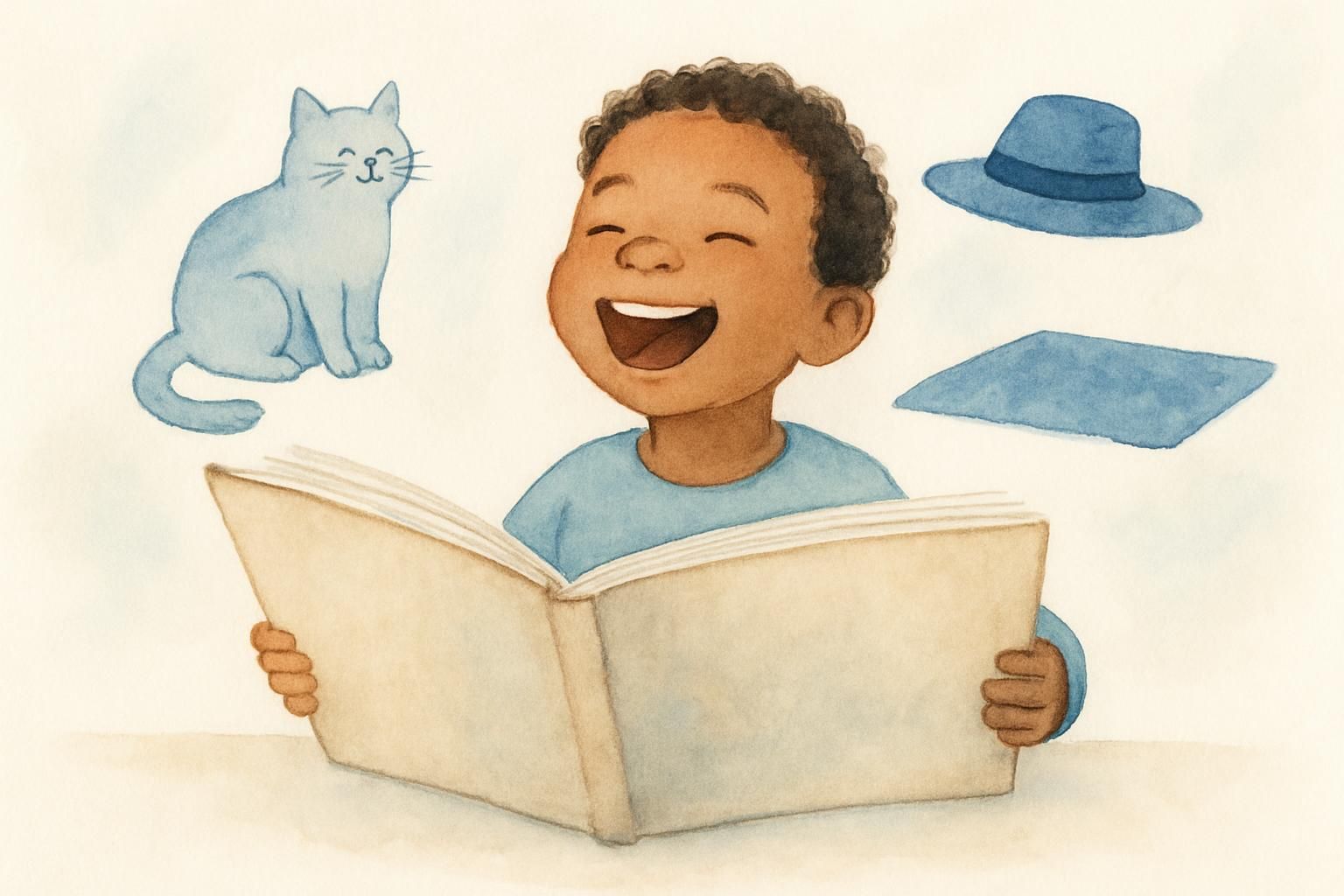
Every parent who has watched a child dissolve into giggles at "cat in the hat on a mat" has witnessed something more than silliness: they've seen a brain making its first moves toward reading. Rhyming games sit at the intersection of play and phonological awareness — and the research, while not without nuance, makes a strong case for taking them seriously. This guide covers the best games to play, the full word list the title promises, and what the evidence actually says so you can invest your time wisely.
Why Rhyming Games Are Worth Your Time
Rhyming skills are crucial for early literacy development because they help children develop phonological awareness — the understanding that spoken language can be broken down into smaller units like words, syllables, and sounds. Many researchers argue that rhyme awareness serves as the precursor to phoneme awareness, and rhyming skills are thought to play an important role in helping children transition to awareness of correspondences between letters and phonemes in words.
Researchers first discovered the correlation between rhyming and reading in the 1980s, and since then, study after study has suggested that good rhymers tend to become good readers. Bradley and Bryant (1983, 1985) reported that sensitivity to rhyme and alliteration prior to a child's entry to formal schooling plays a causal role in their reading success several years later. Children between 37 and 54 months who received explicit instruction in rhyming showed significantly greater gains in rhyme identification and production than those who did not (Reynolds, Callihan, & Browning, 2003).
That said, the picture is not perfectly clean. There is limited evidence within current research that rhyme awareness alone will lead to the development of phoneme awareness and reading ability; recent research suggests rhyming ability is neither an accurate nor a sensitive measure when it comes to predicting reading development, compared to skills such as phoneme blending and segmenting (McMillan, 2002; Shanahan, 2015). The honest takeaway: rhyming games are a valuable and enjoyable entry point into phonological awareness — not a guaranteed cure-all. Pair them with explicit phonics instruction for best results.
Beyond decoding, rhymes follow predictable patterns, aiding memory and sequencing skills, which helps children remember and understand longer strings of words. Rhyming skills contribute significantly to vocabulary expansion: as children learn to identify rhyming patterns, they naturally build connections between words, creating mental networks that enhance word retrieval and usage — which helps them access vocabulary more efficiently when speaking and writing.
The Best Rhyming Words Games
Research shows that students benefit from direct instruction on rhyme recognition paired with fun activities that target this skill. Here are seven games you can run with minimal preparation, arranged roughly by age suitability.
1. Rhyme Circle (All Ages)
To play, have students gather in a large circle. Either you or a student comes up with a word to start; students then take turns going around the circle saying a word that rhymes with the starting word. If a student is stumped, classmates can help brainstorm; if no one can help, the next student creates a new starting word. It doubles as an excellent ice-breaker and requires no materials at all.
2. Rhyming I Spy (Ages 3–6)
Invite your child to look around the room and find an object that rhymes with a word you call out — wall, clock, door, or light. This is especially good for toddlers and preschoolers because it anchors abstract sound patterns to visible, concrete things. Extend the game outdoors for a longer session.
3. Rhyming Memory Match (Ages 4–7)
Each child takes a turn flipping over two picture cards. Add the rhyming element by helping children sound out the words on the cards they've turned over and decide whether they rhyme — you can make rhyming the goal or keep it as a fun extra element. A deck of picture cards is easy to make with index cards and simple drawings, or to print and laminate for repeated use.
4. Rhyming BINGO (Ages 5–8)
The BINGO caller pulls a word card, reads it aloud, and children look for a rhyming word on their card — a simple way to strengthen rhyming skills and help children identify rhyming words independently when looking at pictures. BINGO is a staple in most classrooms and the perfect game to play during literacy groups or rotations. Free printable versions are widely available from sites like Reading Rockets.
5. Hink Pink (Ages 7 and Up)
This is a riddle game in which the answer is always a pair of rhyming words. For example: a rotund feline would be a… fat cat! Free digital downloads of Hink Pink riddles are available, containing samples of rhyming word riddles of varying difficulty. It works beautifully as a classroom warm-up for older primary children because it demands both vocabulary and phonological thinking at the same time.
6. Nonsense Word Rhyming (Ages 3–6)
Nothing seems more silly than making up words, and little ones love when adults use nonsense words to make rhymes. Say a real word — ball — then rattle off a mix of real and nonsense rhymes: "small, tall, fall, lall, zall." The child shouts "That's silly!" when a nonsense word appears. The game builds sound sensitivity without demanding correct spelling knowledge.
7. Rhyming Quick Draw (Ages 4–7)
Draw a quick picture — say, a cat — then invite your child to guess what rhyming picture comes next: mat, bat, or rat? Swap roles so children are the artists. This combines rhyming with storytelling and works especially well for children who learn through visual channels.
Words That Rhyme with "Game" — A Complete List
The original promise of this page: a thorough rhyming list for the word game. Here it is, organised by syllable count and useful for poetry writing, classroom rhyme challenges, or any game where you need ammunition fast.
One Syllable
| Word | Notes |
|---|---|
| aim | to direct |
| blame | to assign fault |
| came | past tense of come |
| claim | to assert or demand |
| dame | a woman; also a title |
| fame | widespread recognition |
| flame | burning fire |
| frame | a border or structure |
| hame | part of a horse collar |
| kame | a geological ridge |
| lame | unable to walk properly; weak |
| maim | to injure seriously |
| name | a word to identify someone |
| same | identical |
| shame | a feeling of guilt or embarrassment |
| tame | not wild; to domesticate |
| wame | Scottish/archaic word for womb |
Two Syllables
| Word | Notes |
|---|---|
| acclaim | enthusiastic public praise |
| aflame | on fire; blazing |
| ballgame | a sporting match |
| became | past tense of become |
| declaim | to recite loudly and formally |
| defame | to damage someone's reputation |
| disclaim | to deny responsibility |
| enflame | variant spelling of inflame |
| exclaim | to cry out suddenly |
| inflame | to intensify or cause irritation |
| misname | to call something by the wrong name |
| postgame | after a sporting event |
| proclaim | to announce officially |
| reclaim | to take back or recover |
| rename | to give a new name |
| warframe | a structural frame; also a proper noun |
Three Syllables
| Word | Notes |
|---|---|
| overcame | past tense of overcome |
| counterclaim | an opposing assertion in law |
| hall of fame | an institution honouring achievement |
Tips for Using These Words in Play
- Rhyming Challenge: Set a timer for 60 seconds. Players race to produce as many words from the one-syllable list as they can from memory. The list above is your answer key.
- Poetry starter: Choose one two-syllable word (e.g., acclaim) and write a couplet. This bridges rhyme games with creative writing — a natural next step.
- Sorting by syllable: Write each word on a card and have children sort into one, two, or three syllables before confirming the rhyme. This adds syllable awareness practice to the rhyming exercise.
FAQ
At what age should children start rhyming games?
By age five, most children can produce rhymes independently, generating words that rhyme with a given word. This developmental progression moves from passive recognition to active production, reflecting growing phonological awareness. Simpler recognition games (does "cat" rhyme with "hat"?) are appropriate from age three onward.
Do rhyming games actually help with reading?
The relationship is real but indirect. Phonological awareness is a strong predictor of success in learning to read, and rhyming ability is an early developing component of phonological awareness. However, rhyming is one part of a larger picture — we need to be careful about treating rhyming ability alone as predictive of reading and spelling progress. Think of rhyme games as a on-ramp, not the whole motorway.
Can adults benefit from rhyming games?
Yes, particularly language learners. Rhyming words provide learners with cues that help them make predictions about the pronunciations of words that share common spelling patterns. For adult learners of English, playing with rhyme families accelerates decoding of unfamiliar words by analogy.
How many rhyming words should a child know before school?
There is no magic number in the research. The goal is awareness — the ability to recognise and produce rhymes — rather than memorising a fixed list. Young children's ability to identify rhyme units is an important component of phonological awareness, and students benefit from direct instruction on rhyme recognition paired with fun activities that target this skill.
Are nonsense rhymes as useful as real words?
Yes. Children analyze words using larger phonological units and eventually become more aware of constituent features in words that share rhyming spelling patterns — whether those words are real or not. Nonsense rhymes also remove the pressure of "getting it right," which keeps reluctant children in the game longer.
Sources
- Study.com — Rhyming Skills and Early Literacy Development
- Reynolds, Callihan, & Browning (2003) — Effect of Instruction on the Development of Rhyming Skills in Young Children (ASHA)
- PLD Literacy — Rhyme: Not the Significant Skill That We Once Thought (includes McMillan, 2002; Shanahan, 2015)
- ERIC — Rhyming in the Context of the Phonological Awareness of Pre-School Children
- Dyslexic Advantage — Nursery Rhyme Knowledge and Phonological Awareness (includes Bradley & Bryant, 1983)
- Reading Rockets — Rhyming Games
- Book Creator — The Importance of Rhyming in Phonological Awareness
- eSpark — 5 Fun and Engaging Rhyme Games for Kids
Once a child can reliably produce rhymes, they are ready to tackle longer, richer texts — which is exactly where Beeblio comes in. Beeblio measures the frequency band you can comfortably read and serves up short readings built just beyond that band, turning every unfamiliar word (including rhyming-family words like acclaim, inflame, or proclaim) into a spaced-repetition flashcard. It is a natural next step from game-based rhyming practice to independent reading growth.