Word of the Week - Sustainable
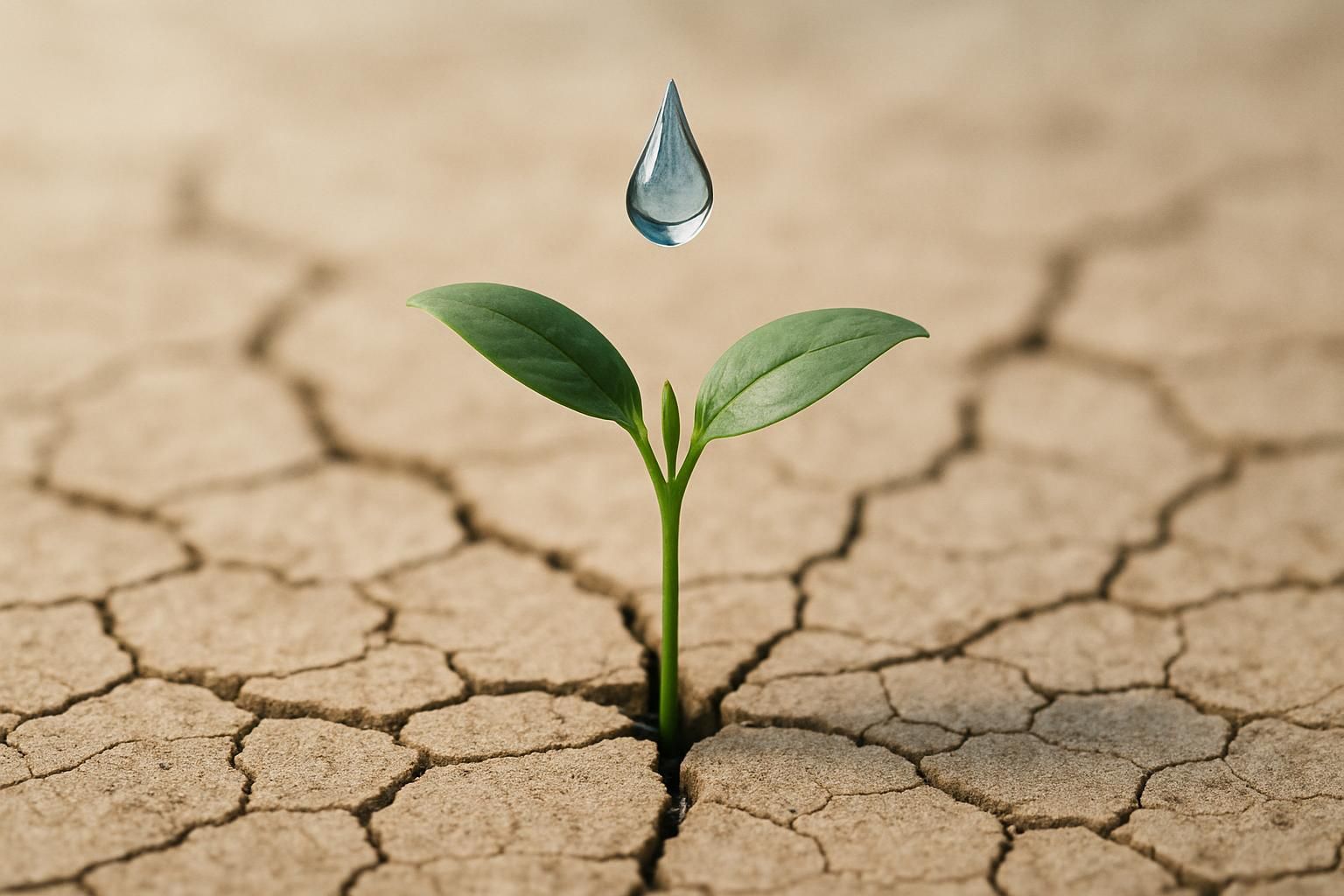
Sustainable is one of those words that has quietly moved from specialist jargon to everyday speech. You will find it in news headlines about climate policy, on the labels of coffee cups, and deep inside UN treaty documents. Because the word turns up across so many subjects — economics, ecology, agriculture, law, public health — a learner who truly understands it gains a key that opens a great many doors. This week, we pull it apart: pronunciation, definitions, word family, synonyms, antonyms, and the surprisingly long history behind a word that sounds very modern.
The Word at a Glance
| Feature | Detail |
|---|---|
| Word | sustainable |
| Pronunciation | sə-ˈstā-nə-bəl |
| Part of speech | Adjective |
| Syllables | sus · tain · a · ble (4 syllables) |
| First recorded in English | 1610s (in the sense "bearable") |
What Does Sustainable Mean?
Merriam-Webster gives three core senses that are worth keeping distinct:
- Capable of being sustained — the broadest, most general sense. A plan, an argument, or a pace of work can all be "sustainable" if they can be kept going without breaking down.
- Of, relating to, or being a method of harvesting or using a resource so that the resource is not depleted or permanently damaged. This is the environmental sense: sustainable agriculture, sustainable fishing, sustainable energy.
- Able to last or continue for a long time — as in "sustainable development" or "sustainable growth."
Notice that the word has both a narrow, ecological meaning and a broader, general-purpose one. A lawyer arguing that a client's position is "not sustainable in court" is using the general sense. A scientist writing about "sustainable protein sources" is using the environmental sense. Both are correct — context decides which is intended.
The landmark definition that shaped modern environmental policy came from the 1987 Brundtland Commission: "Development that meets the needs of the present without compromising the ability of future generations to meet their own needs."
The Word Family
Learning one word well means learning its whole family. Here are the forms you need:
| Form | Part of speech | Example |
|---|---|---|
| sustain | verb | We must sustain this level of effort. |
| sustainable | adjective | Is this pace sustainable? |
| sustainably | adverb | The forest is managed sustainably. |
| sustainability | noun | The report focuses on long-term sustainability. |
| unsustainable | adjective | That rate of consumption is unsustainable. |
Synonyms and Antonyms
A rich vocabulary means knowing not just a word, but the words around it. The right synonym depends on which sense of sustainable you are working with.
In the general sense (able to be maintained or defended)
| Synonyms | Antonyms |
|---|---|
| defensible, justifiable, maintainable, tenable, supportable, viable | indefensible, unjustifiable, unsustainable, untenable |
In the environmental sense (not depleting resources)
| Synonyms | Antonyms |
|---|---|
| renewable, green, eco-friendly, regenerative, low-impact | extractive, depletive, non-renewable, wasteful, unsustainable |
Note that tenable and defensible are not interchangeable with renewable — always choose the synonym that fits the sense you mean.
The History of the Word
Sustainable has Latin roots that go back over two thousand years. The term derives from the Latin verb sustinere, meaning "to hold up," "to support," or "to endure," combining sus- (a variant of sub-, indicating "up from under") and tenere ("to hold").
The English adjective first appeared in the 1610s with the now-obsolete sense of "bearable," formed from sustain + -able. It is attested from 1845 in the sense "defensible, capable of being upheld," and by 1965 with the meaning "capable of being continued or maintained at a certain level."
The practical origins of the environmental meaning trace to 1713, when German forestry official Hans Carl von Carlowitz coined the German equivalent Nachhaltigkeit in his treatise Sylvicultura Oeconomica, advocating timber harvests limited to the rate of forest regrowth to prevent depletion amid Europe's wood shortages.
So while sustainable may feel like a buzzword coined in the last few decades, the concept it carries — holding something up, keeping it going, not using more than can be replaced — is as old as organised human societies.
One quick trick for spelling and remembering the word: if you know sustain, just add -able. And if you know Latin roots, you know that tenere ("to hold") also shows up in maintain, retain, contain, and detain — all words about holding something in some way.
Sustainable in a Sentence — Real Examples
Seeing a word used in a variety of authentic contexts is one of the most effective ways to fix it in memory. Research shows that students need "multiple and various exposures to a word before they fully understand that word and can apply it." Here are examples that span the word's different meanings:
- "A line of argument that is probably not sustainable in a public forum against skilled debaters." (general sense: defensible)
- "However, to be sustainable, agriculture must provide the farmer with a living." (economic and environmental sense)
- "The humanistic component that transforms good organisations into great ones and sustainable success into legacy." (general sense: lasting)
- "The question is whether this rate of growth is sustainable in the long run." (economic sense)
- "We are committed to building sustainable, balanced communities." (environmental-social sense)
Where Does Sustainable Appear in Real Life?
The modern definition often revolves around the "three pillars" of sustainability: environmental protection, social equity, and economic viability. That is why you encounter this word in such different contexts:
- Environment: sustainable energy, sustainable fishing, sustainable packaging
- Economics: sustainable growth, sustainable business models, sustainable supply chains
- Law and argument: a sustainable legal position, a sustainable claim to property
- Health and lifestyle: a sustainable diet, a sustainable exercise routine
- Education: sustainable educational practice, sustainable funding for schools
Recognising which pillar is in play helps you understand the precise shade of meaning the writer intends.
Word of the Week: How to Make It Stick
A wide knowledge of vocabulary improves all areas of communication — listening, speaking, reading, and writing. Simply reading a definition once is rarely enough. A Word-of-the-Week challenge keeps students engaged with new vocabulary by encouraging them to use the word in their conversations, writing assignments, or presentations. Here are three practical ways to lock sustainable into your long-term memory:
- Use it three times today. In a text message, in your journal, or out loud in a conversation. Each use builds a new memory trace.
- Find it in the wild. Search a news website for "sustainable" and read one article where it appears. Notice which sense is being used.
- Make a word map. Write sustainable in the centre of a page. Branch off to its synonyms, antonyms, word family, and a sketch or symbol that represents its meaning to you.
FAQ
Is sustainable only used for environmental topics?
No. While its most prominent use today is in environmental and ecological contexts, sustainable also applies to anything that can be maintained or defended over time — an argument, an economic rate, a physical exercise routine, or a legal claim. The environmental meaning is the most commonly discussed, but the general meaning is just as valid.
What is the difference between sustainable and renewable?
Renewable describes sources of energy or materials that naturally replenish themselves (sunlight, wind, timber managed correctly). Sustainable is broader: it describes any process, system, or rate that can continue without exhausting the resources it depends on. All renewable energy use is ideally sustainable, but "sustainable" can describe non-energy things — a sustainable pace of work, a sustainable business — where "renewable" would not fit.
How do I pronounce sustainable?
The stress falls on the second syllable: sə-STĀY-nə-bəl. Say sustain first (rhymes with maintain), then add -able: sus-TAIN-a-ble.
What does unsustainable mean?
It is simply the opposite: something that cannot be kept going at its current level without causing damage, exhausting resources, or collapsing. "That rate of debt is unsustainable" means it will inevitably have to change. The prefix un- negates the adjective, just as it does in uncomfortable or unclear.
Is sustainability the same as sustainable development?
Sustainability is the broad noun — the quality of being sustainable. Sustainable development is a specific concept in policy and economics, defined most famously by the 1987 Brundtland Commission as development that meets present needs without compromising future generations. Sustainable development is one application of the broader principle of sustainability.
Sources
- Merriam-Webster: "Sustainable" — Definition and Usage
- Merriam-Webster Thesaurus: Synonyms for "Sustainable"
- Online Etymology Dictionary: "Sustainable"
- University of Rochester: Five Definitions of Sustainability (includes Brundtland Commission definition)
- Edutopia: Six Quick Strategies to Build Vocabulary
- Voyager Sopris Learning: Strategies for Teaching Vocabulary
If you are reading in Beeblio, sustainable sits comfortably in the upper-intermediate frequency bands — common enough to appear in everyday news articles, but rich enough in meaning to reward closer study. When Beeblio serves you a short reading on climate, food systems, or economics, you will almost certainly meet this word in context. Tap it to add it to your review deck, then watch for it in your next session — by the third or fourth encounter, you will own it.